Research Archive

Publications, preprints, and project-linked research outcomes.

This page highlights work across computational imaging, smartphone camera enhancement, atmospheric turbulence restoration, simulation, medical imaging, and vision-driven machine learning. Where external resources are available, direct paper and project links are included on each publication card.

9
Publications
6
Recent Papers Since 2024
Imaging, Vision, ML
Core Themes

Featured

Selected recent publications

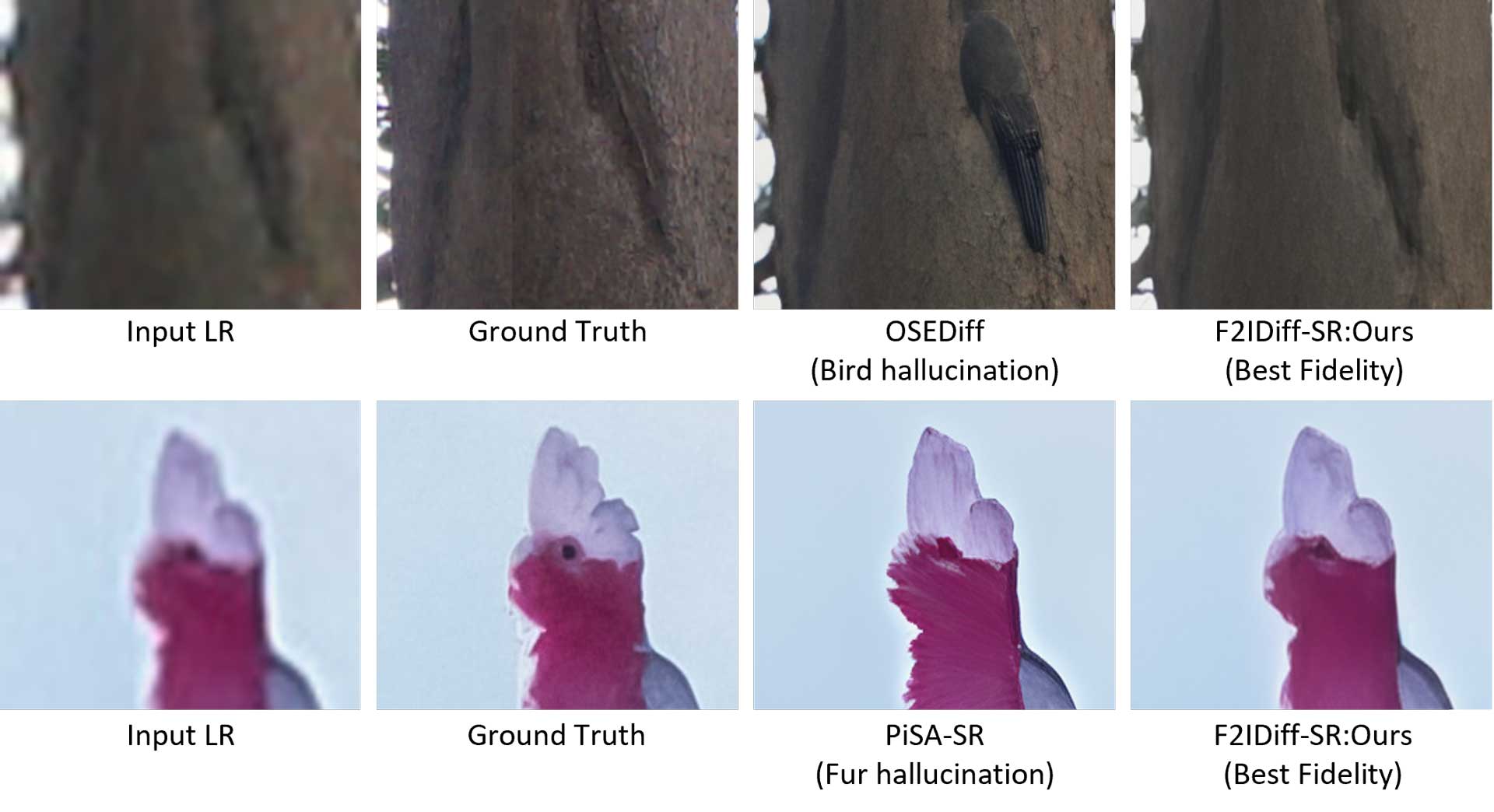
F2IDiff: Real-world Image Super-resolution using Feature-to-Image Diffusion Foundation Model
Generative Imaging 2025
arXiv preprint Recent work at Samsung Research America

F2IDiff: Real-world Image Super-resolution using Feature-to-Image Diffusion Foundation Model

Devendra K. Jangid, Ripon Kumar Saha, Dilshan Godaliyadda, Jing Li, Seok-Jun Lee, and Hamid R. Sheikh

Introduces a feature-conditioned diffusion foundation model for smartphone image super-resolution. The work replaces text-only conditioning with DINOv2 features to improve fidelity, reduce hallucinations, and better support practical camera pipelines.
DAATSim: Depth-Aware Atmospheric Turbulence Simulation for Fast Image Rendering
Simulation & Rendering 2025
Pacific Graphics / Computer Graphics Forum Published

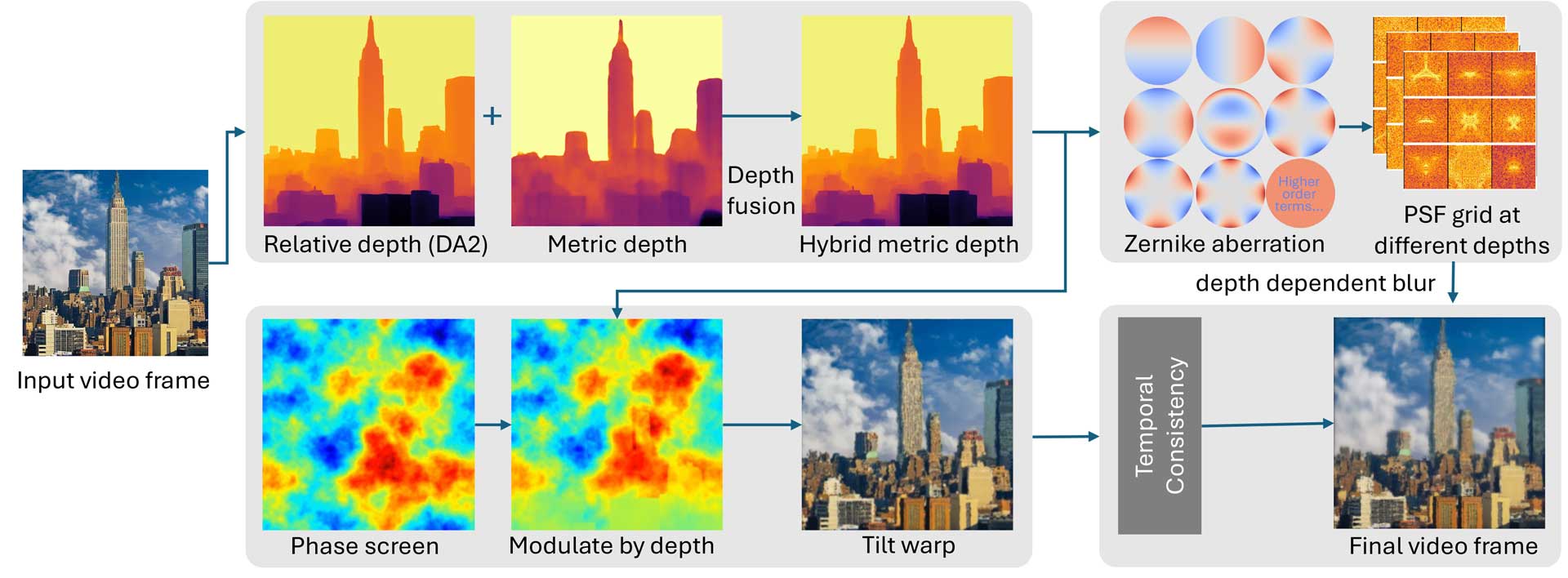
DAATSim: Depth-Aware Atmospheric Turbulence Simulation for Fast Image Rendering

Ripon Kumar Saha, Yufan Zhang, Jinwei Ye, and Suren Jayasuriya

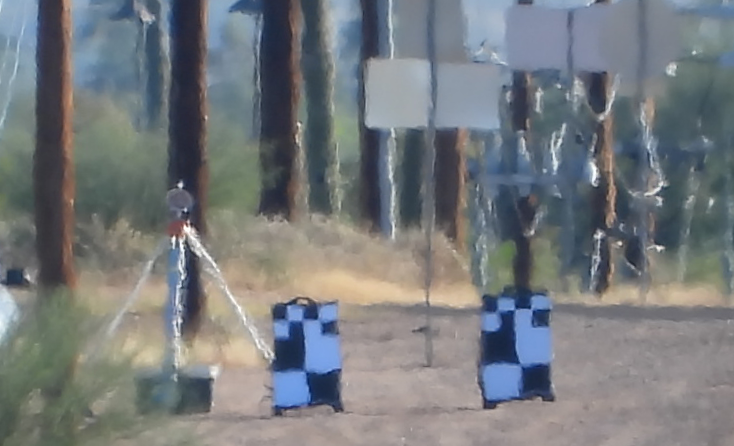
Presents a fast, physically grounded atmospheric turbulence simulator that combines depth estimation with wavefront-inspired rendering to generate spatially varying blur, geometric distortion, and temporally consistent degradation.

Archive

Full publication list

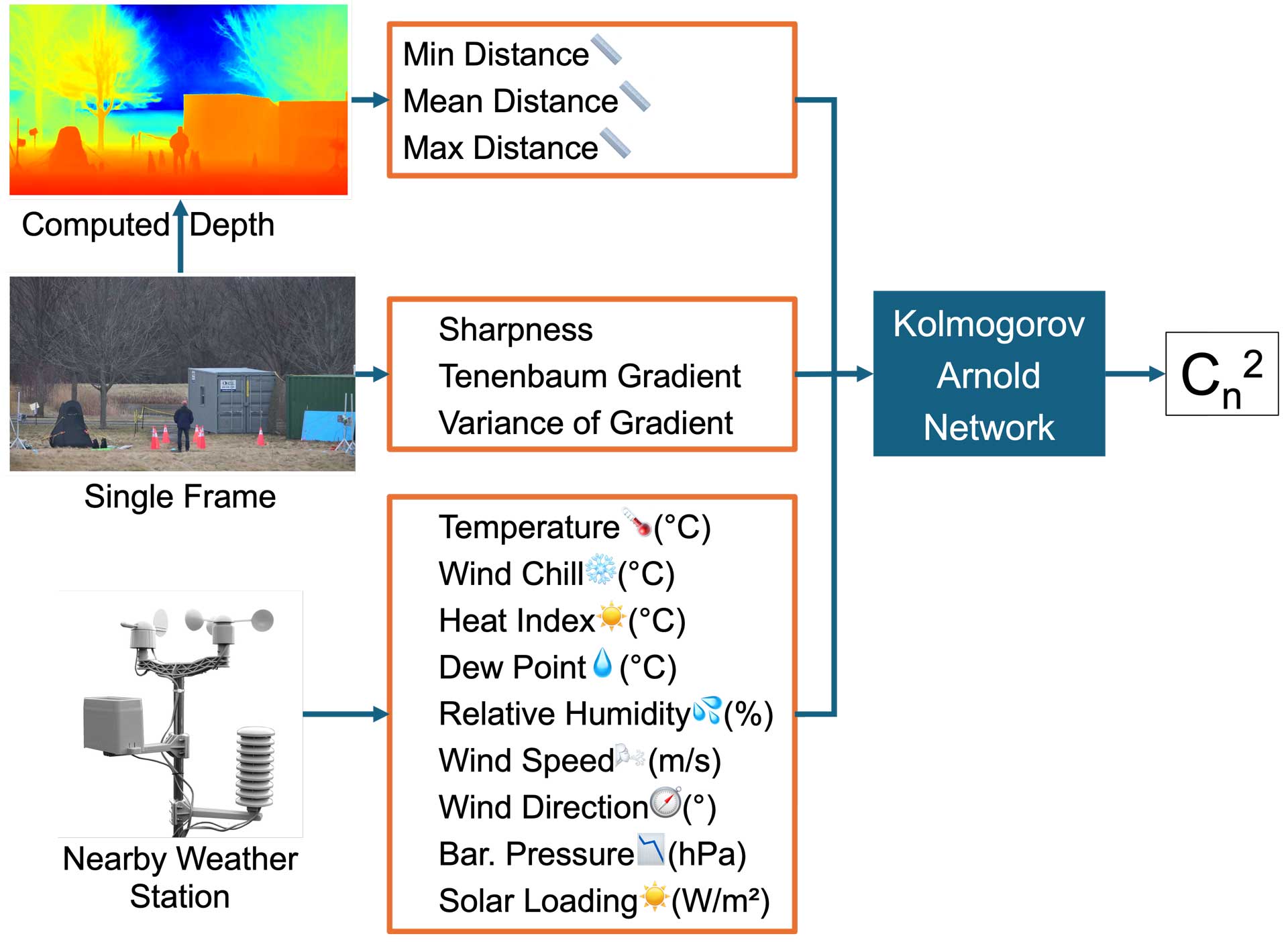
MetaVIn: Meteorological and Visual Integration for Atmospheric Image Degradation Estimation
Multimodal Vision

MetaVIn: Meteorological and Visual Integration for Atmospheric Image Degradation Estimation

Saha, Ripon Kumar, Mccloskey S, Jayasuriya S

WACV 2025 Conference submission

Combines meteorological cues and visual features to estimate atmospheric image degradation more robustly than image-only baselines.

Turb-Seg-Res: A Segment-then-Restore Pipeline for Dynamic Videos with Atmospheric Turbulence
Restoration

Turb-Seg-Res: A Segment-then-Restore Pipeline for Dynamic Videos with Atmospheric Turbulence

Ripon Kumar Saha, Qin D, e J, Li N, and Jayasuriya S

CVPR 2024 Published

Introduces a dynamic-scene restoration pipeline that separates motion understanding from restoration to improve turbulence mitigation in complex videos.

Unsupervised Region-Growing Network for Object Segmentation in Atmospheric Turbulence
Segmentation

Unsupervised Region-Growing Network for Object Segmentation in Atmospheric Turbulence

Qin D, Saha, Ripon Kumar, Jayasuriya S, Ye J, and Li N

ECCV 2024 Published

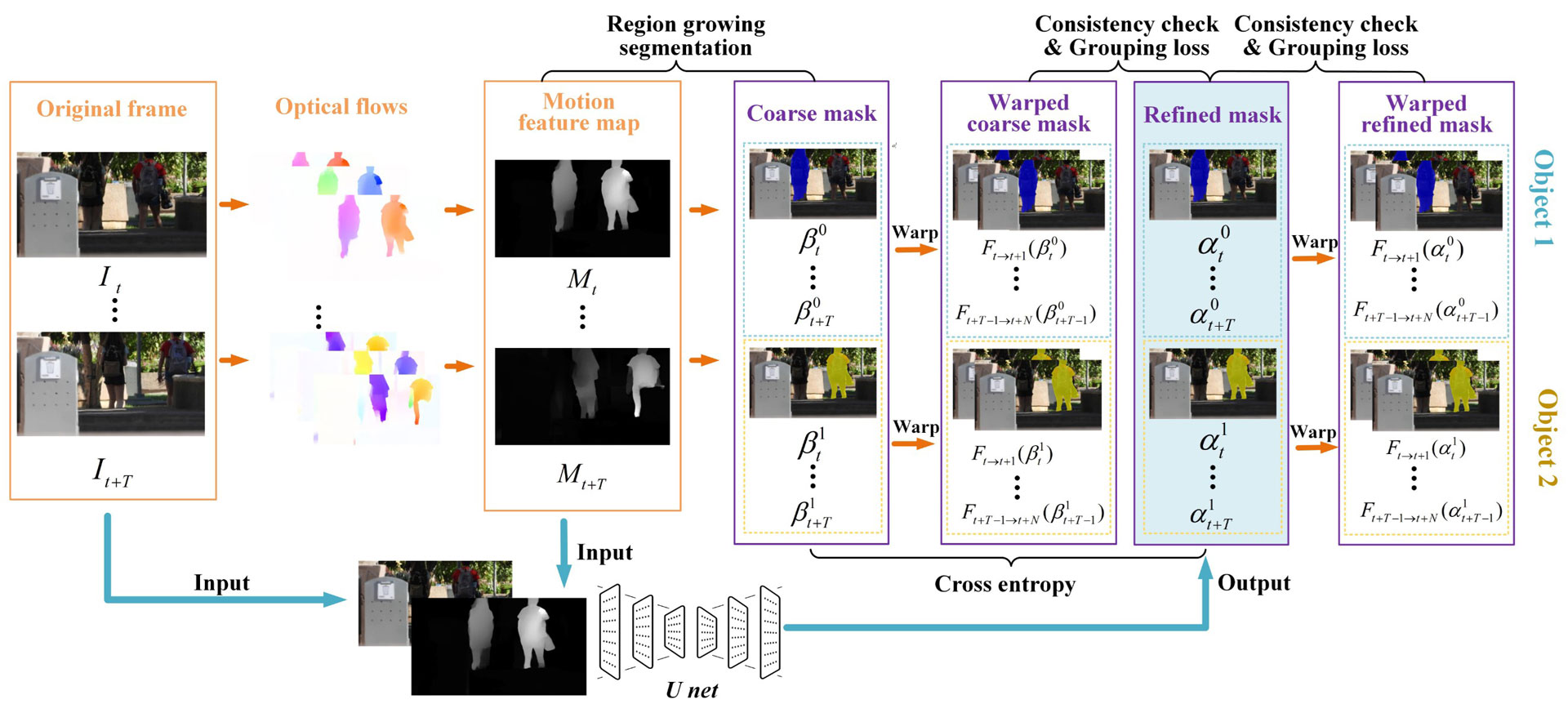
Presents an unsupervised segmentation framework tailored for distorted turbulent imagery where stable object boundaries are difficult to recover.

Turbulence Strength C2n Estimation from Video using Physics-based Deep Learning
Physics-based ML

Turbulence Strength C2n Estimation from Video using Physics-based Deep Learning

Ripon Kumar Saha, Esen S, Jihoo K, Joseph S, and Suren J

Optics Express 2022 Published

Develops a physics-based deep learning framework for estimating atmospheric turbulence strength directly from video in real imaging conditions.

Automated Quantification of Meibomian Gland Dropout in Infrared Meibography using Deep Learning
Medical Imaging

Automated Quantification of Meibomian Gland Dropout in Infrared Meibography using Deep Learning

Ripon Kumar Saha, Chowdhury AM, Na KS, Hwang GD, Hwang H, and Chung E

Ocular Surface 2022 Published

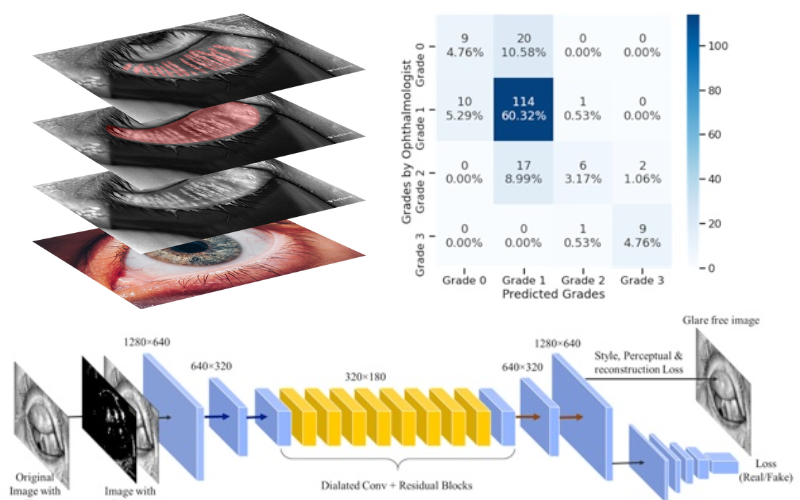
Uses deep learning for automated gland analysis and clinical grading from infrared meibography, enabling robust ocular surface assessment.

Using a CNN Model to Assess Visual Artwork's Creativity
Vision & Perception

Using a CNN Model to Assess Visual Artwork's Creativity

Zhehan Zhang, Meihua Qian, Li Luo, Ripon Kumar Saha, Qianyi Gao, and Xinxin Song

APA / arXiv 2024 Published / preprint

Explores CNN-based modeling of perceived creativity in visual artwork, connecting computer vision features with psychological evaluation.

Electrocorticography-Based Motor Imagery Movements Classification using LSTM based on Deep Learning Approach
Biomedical AI

Electrocorticography-Based Motor Imagery Movements Classification using LSTM based on Deep Learning Approach

Md Rashid, Md Islam, N. Sulaiman, B. S. Bari, Ripon Kumar Saha, and M. J. Hasan

SN Applied Sciences 2020 Published

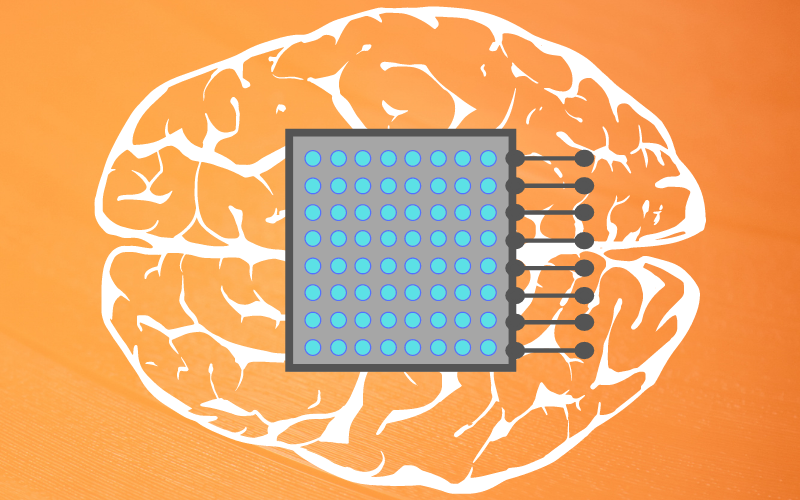
Applies LSTM-based modeling to electrocorticography signals for motor imagery movement classification in a biomedical setting.